Peripheral artery disease is a cardiovascular condition affecting the arteries of the legs. It causes pain in the calves or thighs, and often numbness or tingling in the feet and toes. It is common, it is progressive, and it is missed constantly — largely because the early symptoms are exactly what people expect getting older to feel like.
The underlying cause is atherosclerosis. Cholesterol and other material from the bloodstream accumulate on the inner wall of the artery, forming plaque. As that buildup continues, the artery narrows and the volume of blood able to pass through it falls. The muscle downstream receives less oxygen than it needs, particularly when it is being asked to work.
The symptoms worth taking seriously
Leg pain is the most common. It may be a dull ache or a sharper cramping in the calf or thigh, and the pattern is what distinguishes it: it appears reliably after walking a certain distance and resolves within a few minutes of stopping. Patients often know their distance to the block.
Leg fatigue is the more subtle cousin. Muscles working without enough oxygen tire quickly, so people find themselves unexpectedly worn out after a short walk or a flight of stairs, and adapt by walking less — which makes the circulation worse.
Skin and nail changes follow. The skin over the shin may become shiny and hairless. The foot may look pale when elevated and dusky red when hanging down. Toenails grow slowly or stop growing. The affected foot often feels colder than the other.
Swelling, and above all non-healing wounds, are the late signs. A cut, blister or ulcer on the foot that has not closed in several weeks is a circulation problem until proven otherwise. This is the symptom that most often arrives too late, and it is the one that most often precedes limb loss.
How PAD is diagnosed
You can have PAD and not know it, and many people do not find out until a physician looks for it. Diagnosis begins with a history and a physical examination — checking pulses in the feet, looking at skin color and temperature, and asking about walking distance.
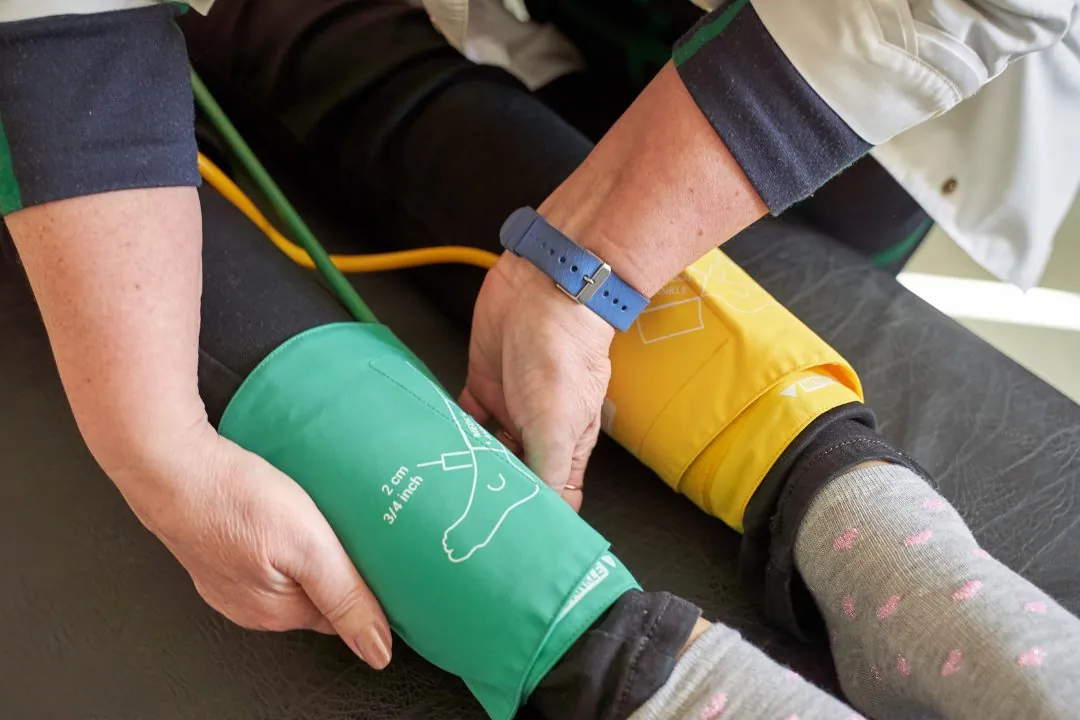
The ankle-brachial index compares blood pressure at the ankle with blood pressure at the arm and is painless, quick and highly informative. Where the index is abnormal or the history is convincing, arterial duplex ultrasound identifies where the narrowing sits and how severe it is. More detailed imaging follows only if intervention is being planned.
How PAD is treated
Treatment has three components. The first is lifestyle: stopping smoking, and a structured walking program, which sounds like the opposite of what an aching leg wants but which reliably increases walking distance over time. The second is medication to control blood pressure, cholesterol, blood sugar and clotting risk. The third, where symptoms are limiting or the limb is threatened, is a procedure to reopen the artery — usually from the inside, through a needle puncture, rather than by open surgery.
Preventing it in the first place
The prevention list is short and unglamorous: maintain a healthy weight, exercise regularly, and do not smoke. Regular walking or cycling keeps the arteries healthier and lowers the risk of heart attack and stroke alongside PAD. Smoking is the dominant modifiable risk, and quitting improves the outlook more than any other single action.
When to see a doctor
Make an appointment if you have leg pain brought on by walking and relieved by rest; leg heaviness or fatigue after short distances or standing; discoloration, coldness or shiny skin on the lower leg or foot; or any wound on the foot that is not healing.
Useful questions to bring: What is the best treatment for my anatomy? What lifestyle changes will make the biggest difference for me? What are the risks and benefits of a procedure versus continuing medical management?
There is no cure for PAD, but early detection and proper treatment substantially reduce the risk of heart attack, stroke and limb loss. Diagnosed early and managed well, the outlook is good — including for patients who also have diabetes or other conditions.