
Uterine fibroids are benign muscular growths, and they are extraordinarily common. What varies is how much trouble they cause. Some are silent. Others produce bleeding heavy enough to cause anemia, periods that last for weeks, pelvic pressure, a visibly distended abdomen, pain with intercourse, constipation, or the constant need to urinate that comes from a fibroid pressing on the bladder.
For decades the definitive answer was hysterectomy. It works, and for some women it is genuinely the right choice — but it is major surgery, it ends fertility, and it is a very large intervention for a benign condition.
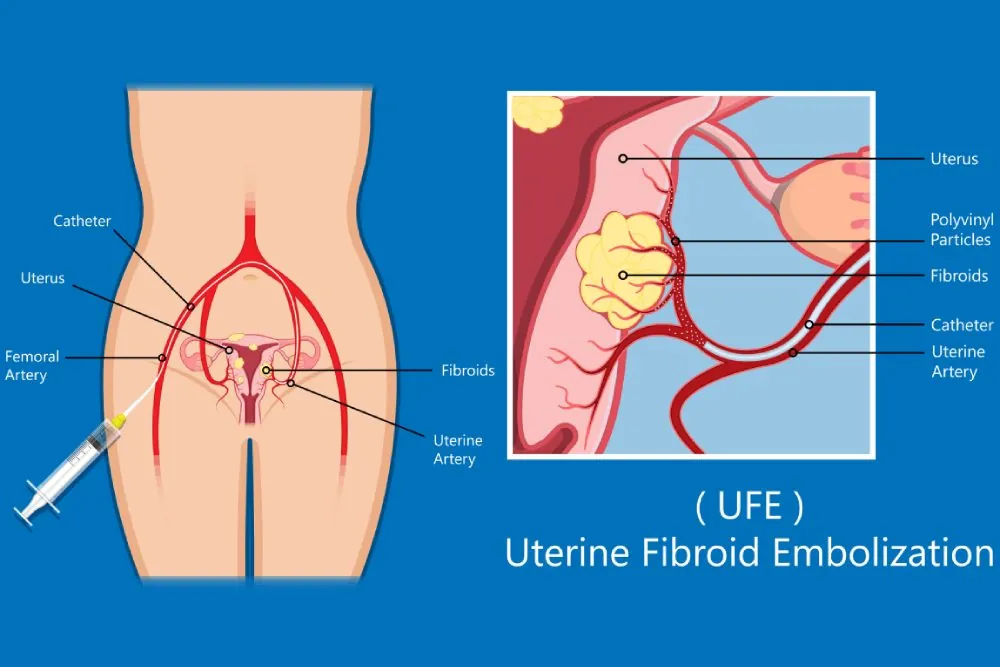
Uterine fibroid embolization treats the fibroids without removing anything. Fibroids depend on a rich, abnormal blood supply. We reach the uterine arteries through a catheter and release particles that block flow to the fibroids specifically, while the healthy uterine tissue, which has a different and more resilient blood supply, continues to be perfused. Deprived of their supply, the fibroids soften, shrink and stop bleeding.
UFE is performed through a needle puncture, requires no incision and no general anesthesia, and most women go home the same day.
Imaging tells us how many fibroids there are, where they sit, how large they are, and whether embolization is the right tool. It also rules out the small number of conditions that mimic fibroids.
A needle enters the artery. A microcatheter is navigated to the uterine arteries under live X-ray guidance.
Particles are released into the vessels feeding the fibroids on both sides. The healthy myometrium keeps its blood supply.
The catheter is removed. Cramping in the first twenty-four hours is expected and is managed with medication we send you home with.
Expect significant cramping for the first day or two — this is the fibroids responding, and it is treated with medication arranged in advance. Most women are back to normal activity within a week. Bleeding usually improves with the first or second cycle, and bulk symptoms ease over three to six months as the fibroids shrink.
Yes. That is the point of the procedure. Nothing is removed.
Pregnancies after UFE are well documented, but fertility is a nuanced discussion that depends on your age, your fibroids and your goals. If future pregnancy matters to you, say so at the first visit — for some women myomectomy is the better choice, and we will tell you that plainly.
Myomectomy removes fibroids surgically and preserves the uterus, but it is an operation with incisions, anesthesia and a longer recovery, and fibroids can regrow. UFE treats every fibroid in the uterus at once through a pinhole. The right answer depends on the number, size and position of your fibroids and on your plans.
UFE is a well-established, widely covered treatment for symptomatic fibroids. We verify your benefits and give you the numbers before scheduling.
Tell us what you're experiencing. We'll call to schedule and answer questions before you ever come in.
(212) 991-9991Fax (888) 331-9568
Please call the office to request an appointment or discuss the next step. Do not send medical information by ordinary email. For a medical emergency, call 911.