
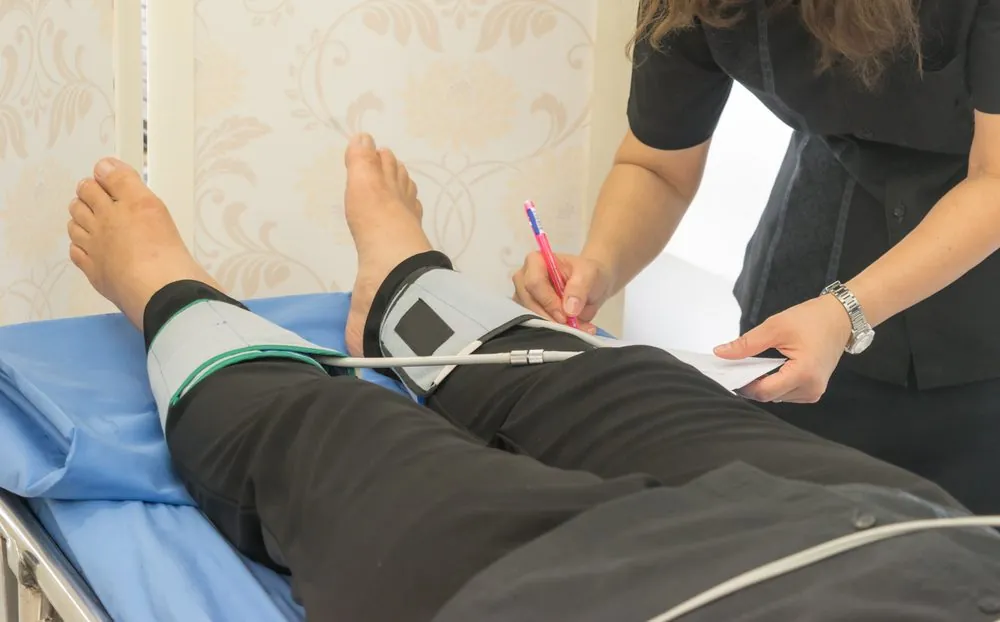
Peripheral vascular disease — often called peripheral artery disease, or PAD — is the buildup of plaque in the arteries that carry blood away from the heart, most commonly the arteries feeding the legs and feet. As those arteries narrow, the muscle downstream cannot get enough oxygen when it is asked to work.
The classic first symptom is claudication: a cramp or ache in the calf, thigh or buttock that comes on reliably after walking a certain distance and disappears within a few minutes of stopping. Many people quietly adjust their lives around it and never mention it to a physician. Later signs are harder to ignore — pain in the foot at rest or at night, coldness or numbness, hair loss over the shin, toenails that stop growing, and cuts on the foot that will not close.
PAD also carries a message about the rest of the body. Plaque in the leg arteries usually means plaque elsewhere, which is why a PAD diagnosis meaningfully raises the risk of heart attack and stroke. Treating the leg is only part of the job; the other part is aggressive control of the things driving the plaque — smoking above all, then blood pressure, cholesterol and diabetes.
We start with an ankle-brachial index and arterial duplex ultrasound. These are painless, take under an hour, and tell us how much flow is actually reaching the foot.
If intervention is likely to help, a catheter angiogram maps the blockage precisely — where it is, how long it is, and how calcified.
Through the same catheter we can balloon the narrowing open (angioplasty), shave or drill out calcified plaque (atherectomy), deliver a drug-coated balloon, or place a stent where the vessel needs scaffolding.
Reopening an artery buys time; keeping it open requires medical therapy, a walking program and, where relevant, stopping smoking. We build that plan with you rather than handing you a pamphlet.
Non-invasive testing requires no recovery at all. After an angiogram or intervention, most patients go home the same day, with a few hours of lying flat if the groin was used as access. Walking is encouraged immediately and is itself part of the treatment.
No. Reproducible cramping that comes on at a predictable distance and resolves with rest is a circulation symptom until proven otherwise, and it is worth an hour of painless testing to find out. It is one of the most commonly dismissed warning signs in medicine.
Most patients today do not. The great majority of blockages can be treated from inside the artery through a needle puncture. Open surgical bypass remains an option for anatomy that cannot be treated any other way.
It progresses. Claudication becomes rest pain, rest pain becomes tissue loss, and tissue loss is how people lose toes and limbs. It also flags a substantially elevated risk of heart attack and stroke that deserves treatment in its own right.
More than any procedure we can offer. Continued smoking is the single strongest predictor that a treated artery will narrow again. We will help you stop, and we will keep helping.
Tell us what you're experiencing. We'll call to schedule and answer questions before you ever come in.
(212) 991-9991Fax (888) 331-9568
Please call the office to request an appointment or discuss the next step. Do not send medical information by ordinary email. For a medical emergency, call 911.